Revisiting Pavement's Obscure 1993 Tribute to R.E.M.
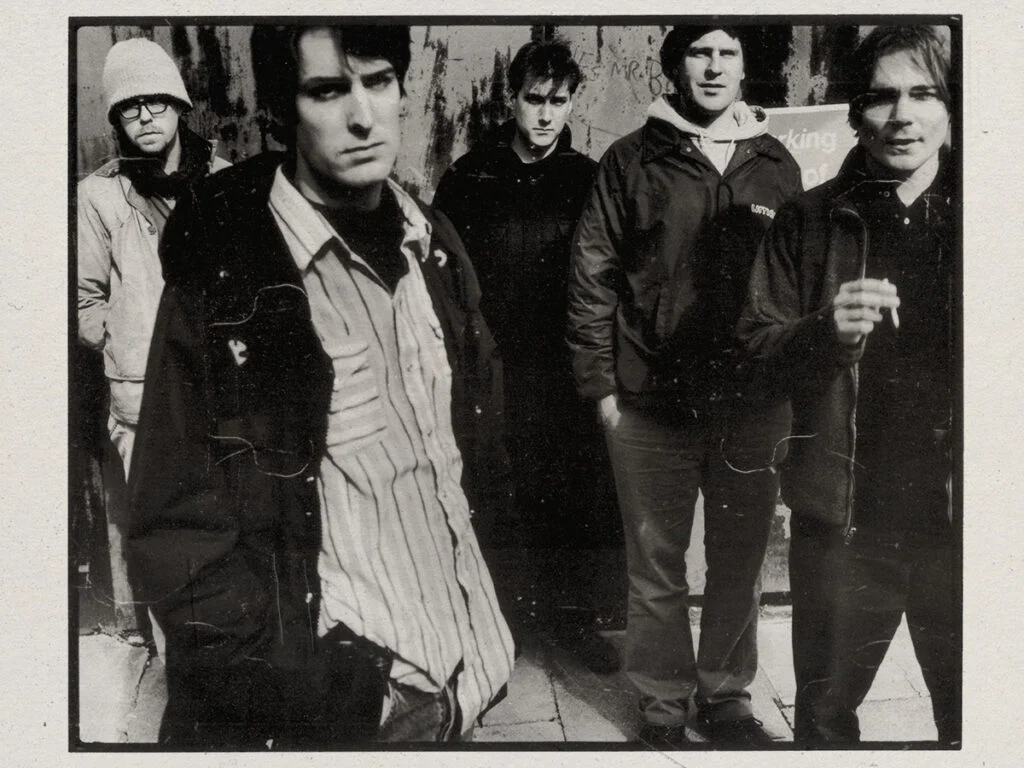
British music outlet Far Out Magazine has revisited Pavement's "The Unseen Power of the Picket Fence," a deep cut from the 1993 AIDS-charity compilation No Alternative — one of the defining anthologies of alternative rock's peak years. Delivered as a half-improvised talk-song, the track has frontman Stephen Malkmus naming R.E.M. outright in its opening verse, setting R.E.M.'s vision of a "new South" against the institutionalized old South within the same song.
How the song came together
According to Far Out's reporting, Pavement recorded the track shortly after covering R.E.M.'s early song "Camera." Unlike R.E.M.'s clean jangle-pop sound, Malkmus talks over a considerably noisier guitar riff, running through R.E.M.'s recording history and signature songs with commentary that isn't always accurate.
The opening line's reference to "Southern boys" might read as a jab — R.E.M. was then on Warner Bros. with "Everybody Hurts" charting, and Pavement would later needle Smashing Pumpkins and Stone Temple Pilots on their single "Range Life." But the report frames this one as sincere homage: Malkmus, it notes, was a genuine devotee. He wrote a piece for Q magazine in 2001 about R.E.M.'s 1984 album Reckoning, calling it the soundtrack to his first love, and declared "R.E.M. were all about the South" — praising Peter Buck for playing jangly, underground-leaning songs in paisley shirts at a time when the South's mainstream ran to the Marshall Tucker Band and Lynyrd Skynyrd.
Charlottesville and Ectoslavia: Pavement's Virginia prehistory
Pavement is often filed as a California band, but its members' formative years were scattered across the US. Malkmus and multi-instrumentalist Bob Nastanovich both studied at the University of Virginia in Charlottesville.
Their late-1980s college years are well documented in indie-rock lore, overlapping with future Silver Jews frontman David Berman and future Yo La Tengo bassist James McNew. The four briefly played together in a short-lived band called Ectoslavia, years before any of them found fame, and spun records on campus station WTJU. Their majors: Berman in English literature, McNew in Japanese, Nastanovich in political science, Malkmus in history.
Malkmus's undergraduate thesis, titled "Inventing Tradition in America: The Country Club of Virginia," is now held in the University of Virginia archives. Far Out suggests that the title alone signals a critical eye on how American Southern institutions manufacture their own myths, normalizing a past that includes legal slavery and the Civil War — material the report identifies as the song's other half.