New Zealand's Live Music Boom and Bust: New Arenas Rise as Festivals Fold
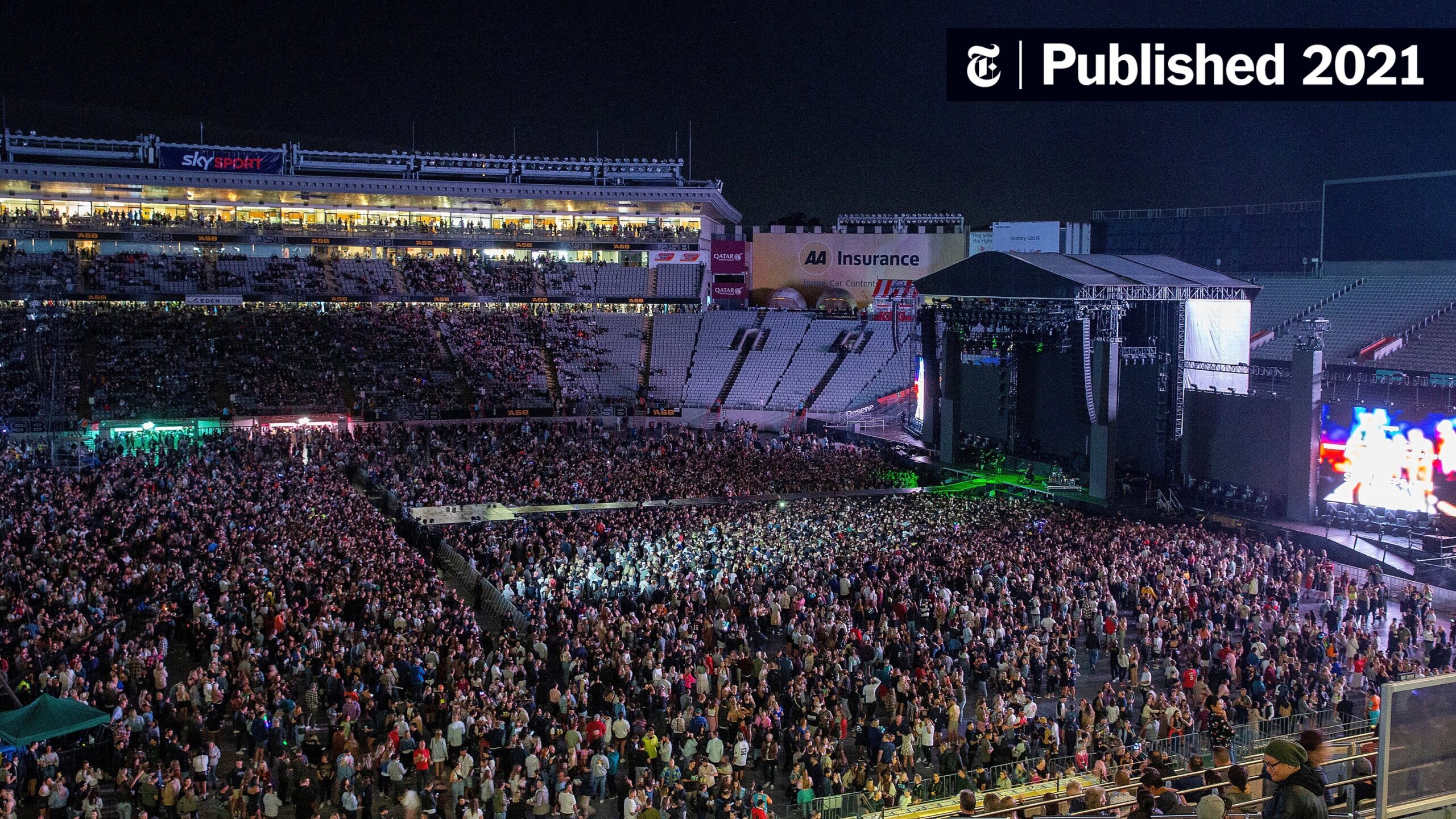
New Zealand, population roughly 5.5 million, is in the middle of a split-screen moment for live music: the most concentrated wave of venue investment in its history is landing just as a string of independent festivals cancel their 2026 editions. The picture comes from an industry report published by IQ on July 30, 2026 (written by Lars Brandle), drawing on venue operators, promoters and artist managers across the country.
Per IFPI's Global Music Report 2026, New Zealand's recorded music revenue grew 3% year-on-year, accounting for 15.2% of the Australia/New Zealand region, which itself grew only 1.5% to US$623 million in 2025.
Three new venues in 18 months
Christchurch's new Te Kaha (OneNZ Stadium) — NZ$683 million, capacity 38,000, owned by Christchurch City Council — opened to the public in March 2026, fifteen years after an earthquake destroyed the city's former Lancaster Park stadium. Its first international booking is Robbie Williams on November 28, with Foo Fighters slated for early 2027. Williams also plays Auckland's Eden Park (capacity 50,000) on November 24 — a venue whose annual concert cap has just been raised from 12 shows to 32 (12 large-scale plus 20 mid-sized).
Hamilton's BNZ Theatre opened in early 2026 and is run long-term by Live Nation. Wellington Town Hall is due to reopen after refurbishment in early 2027, with a basement level planned as a national music hub and recording studio backed by Lord of the Rings director Peter Jackson and Fran Walsh. Industry figure Gus Sharp called the simultaneous wave of infrastructure spending unprecedented, but warned it's landing in a fragile ecosystem, with the industry divided on whether the money is going to the right places — Wellington, he noted, still lacks a venue in the roughly 10,000-capacity range.
A two-speed touring market
Auckland's Spark Arena (13,000 capacity) is having its strongest run ever: a 2026 Linkin Park show drew 12,736 ticketed fans, a venue record not seen in nearly 20 years. GM Mark Gosling says the cost and complexity of international tour logistics remains the most persistent structural challenge, with his team pitching Auckland dates before routing is even finalized. Hamilton's Claudelands Events Centre (6,000 capacity) is seeing renewed international touring interest, according to Gary Taylor, though artists and agents are now choosier about markets and routing. Venues Wellington's Marek Peszynski says the tribute/covers show market is becoming saturated. Ticketmaster NZ GM Anjelica Devoe says ticket sales are outperforming the same period last year.
Exports are climbing too: per the New Zealand Music Commission's International GigGuide, New Zealand artists played 2,088 shows internationally last year, up 30%, with 163 acts touring or playing festivals across 59 countries. Brother duo Balu Brigada led with 61 international shows; The Beths and Phoebe Rings also ranked highly via a joint US tour and individual runs across Australia, the UK, Europe and Asia.
Cost pressures are rising in parallel. Eccles Entertainment co-founder Helen Eccles cites high fuel costs threatening tour viability; artist manager Cushla Aston says the cost-of-living crisis is hitting both creative output and touring capacity, with full-time managers scarce and mid-tier or emerging artists struggling to sustain national tours. Promoter Kurt Shanks (Plus1) called the last 18 months "pretty grim," though he says buzzy new acts can still turn a profit. The New Zealand Music Commission's Cath Andersen notes that outside of big-name shows, up to 75% of tickets for local gigs now sell in the 48 hours before the show — a trend she warns could threaten the viability of shows in regions like the South Island long-term.
Festivals split in two directions
The Others Way, an independent festival founded in 2015 on Auckland's Karangahape Road, has cancelled its 2026 edition and may not return; organizer Banished Music cited financial pressure, rising industry costs and an unstable ticketing and sponsorship environment. Tauranga's One Love has also cancelled its 2026 edition, with organizers saying more than 80% of attendees had to travel across two days to attend. WOMAD NZ has likewise announced a cancellation.
At the other end of the spectrum, Live Nation's Christchurch festival Electric Avenue keeps growing and selling out year after year — its next edition sold out before any lineup was announced. This February's edition at Hagley Park centered on Split Enz's 50th anniversary and a reunion show, their first in nearly 20 years. Wellington's first-ever Ultra New Zealand sold 23,000 tickets and signed a multi-year deal, while Rhythm & Vines is set to take place in Gisborne at year's end.
Policy and structural gaps
The New Zealand government earmarked a NZ$70 million, two-year revitalization package in late 2025 — NZ$40 million to attract major international events starting in 2026, and NZ$10 million to support existing events and international opportunities. Shanks noted the plan has drawn controversy for funding overseas promoters. Gus Sharp also pointed out that New Zealand lacks a unified lobbying body like Australia's Live Performance Australia, leaving government appeals fragmented and industry-wide data-sharing badly lacking. New Zealand holds its 2026 general election on November 7.