mui zyu Releases Cantonese Self-Cover Album, Announces Three-City Japan Tour in September
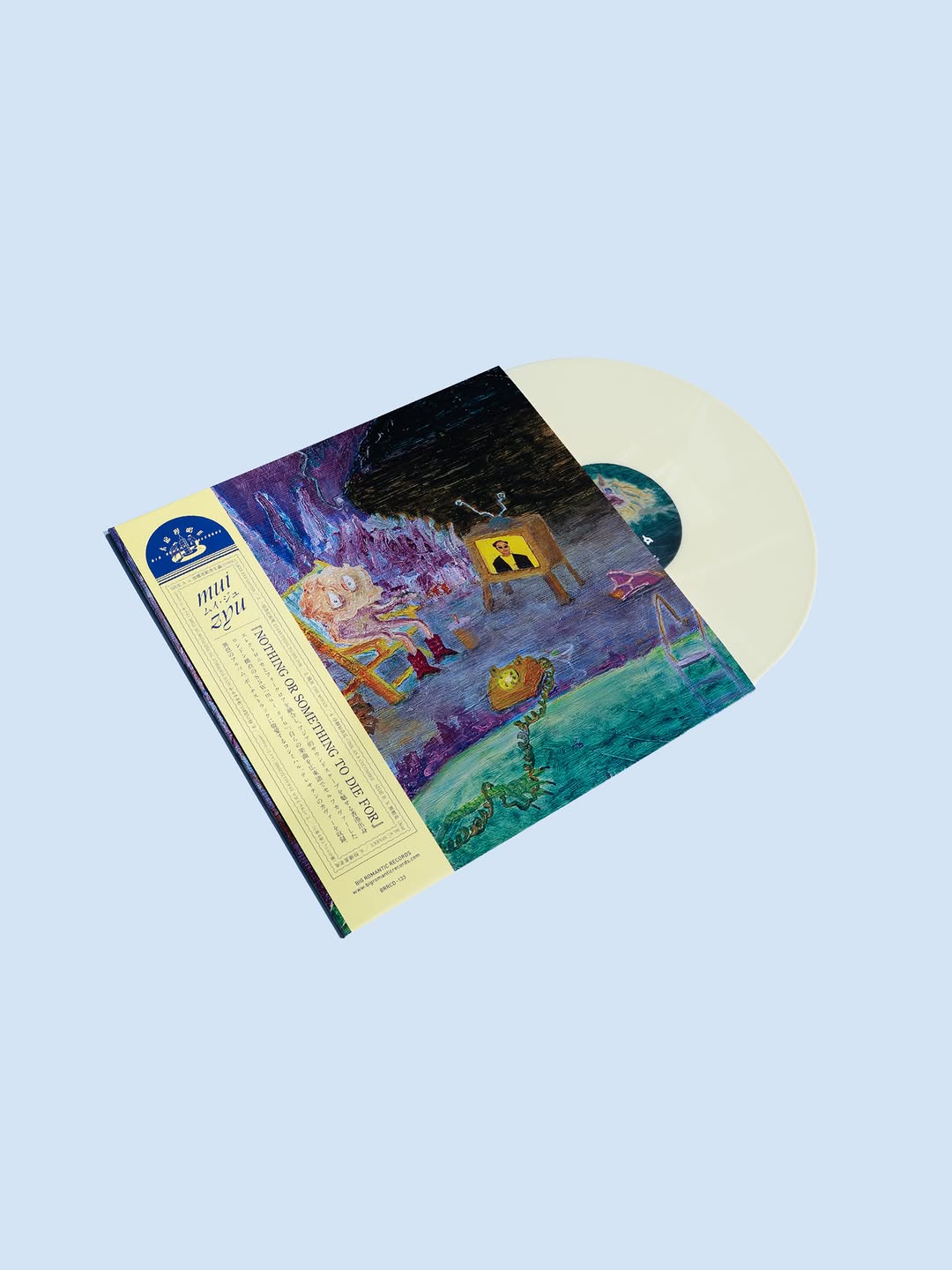
Hong Kong-born, London-based independent musician mui zyu (Eva Liu) has released nothing or something to die for (Cantonese Tasting Menu), a self-cover reworking of her 2024 album nothing or something to die for sung in her native Cantonese. The record comes out via Japanese label BIG ROMANTIC RECORDS on Cream Yellow Vinyl LP. To mark the release, mui zyu will tour three Japanese cities — Kyoto, Matsumoto and Tokyo — from September 8 to 10, 2026, with a local Japanese act joining her at each stop.
The album
- Title: nothing or something to die for (Cantonese Tasting Menu)
- Catalog number: BRRCD-133
- Format: LP / Cream Yellow Vinyl
- Price: ¥4,600
- Label: BIG ROMANTIC RECORDS
- Where to buy: BIG ROMANTIC RECORDS' online store (link in the promoter's Instagram bio)
The tracklist draws primarily from 2024's nothing or something to die for, arranged in something close to a best-of sequence, plus two covers: Koshi Miharu's "Parallelism" and Teresa Teng's "Toki no Nagare ni Mi wo Makase." The label describes the music as moving between electronic and folk elements, using strings, chopped-up drum samples, traditional Chinese instruments and electronic tones — with the shift to Cantonese lyrics giving the existing tracks new sonic textures and contours.
Japan Tour 2026 Dates
- 2026/09/08 (Tue) Kyoto — UrBANGUILD | mui zyu / Kitsune no Yomeiri
- 2026/09/09 (Wed) Matsumoto — Give me little more. | mui zyu / TANGINGUGUN
- 2026/09/10 (Thu) Tokyo — Aoyama Tsukimi Ru Kimi Omou | mui zyu / Kuroiwa Asuka to Yoru
Ticket prices and on-sale dates have not yet been announced by the promoter; ticketing and further details will be posted via the link in BIG ROMANTIC RECORDS' Instagram bio.
About mui zyu
mui zyu is the solo project of Hong Kong-born Eva Liu, whose work has long engaged with cultural identity, migration and the disorientation of contemporary society, moving between East and West, folk and electronic. In recent years she has built a following in European and American independent music scenes; this Cantonese-language version can be seen as a look back into the linguistic roots of her own work.