How Football Stickers Took Over City Streets Worldwide
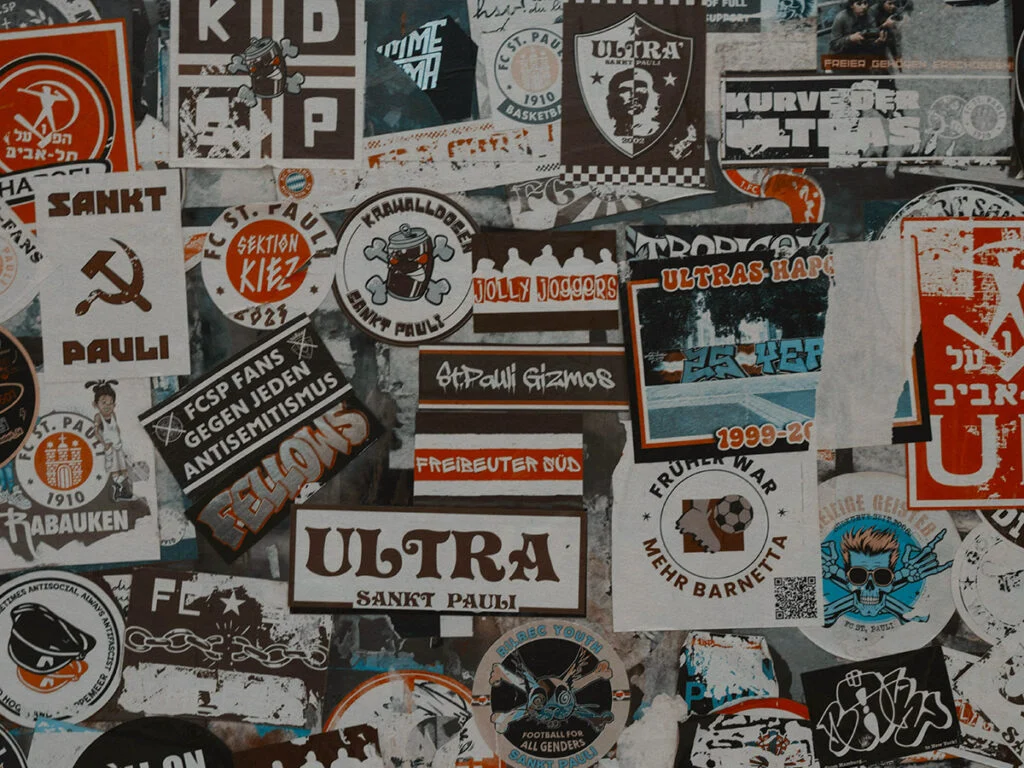
British culture outlet Far Out Magazine published an analysis on August 11, 2026 arguing that football stickers have quietly become a fixture of urban landscapes worldwide — turning up on pub toilet doors in Manchester, street signs in New York, small Balkan villages, and major East Asian cities alike. Club crests, nicknames, and ultras group logos spread as cheap vinyl stickers, and the article frames the whole phenomenon as being about visibility and claiming space.
The logic behind the stickers
The piece links sticker culture to other fan rituals — England flags on European city squares during international tournaments, fans wearing club colors on away days — as expressions of identity and presence. Stickers add a further layer: leaving a physical trace. Some fans stick them in far-flung cities just to mark that they passed through; others target lamp posts specifically outside rival clubs' stadiums.
Budget flights as the real driver
According to the article, cheap air travel is what has really accelerated this. Fans already move along highways and rail lines every other week for domestic fixtures, and international matches, national team games, and personal travel expand the range of cities they can reach. The piece describes it as the reverse of typical tourism: instead of bringing home a postcard or fridge magnet, fans leave a small piece of their identity behind in the places they visit.
Turf wars in Hamburg and Belgrade
In cities with dense football cultures, stickers become genuinely territorial. The article cites Hamburg and Belgrade as examples where rival clubs' stickers get slapped directly over each other, creating an ongoing cycle of one-upmanship. Close inspection reveals thick, layered buildup — the article compares it to tree rings, a way of reading how long a particular sticker war has been running. In the UK, stickers are often designed and made by fans themselves, with ultras groups producing and distributing their own designs combining slogans, club colors, and faction identity.
Social media and the graffiti debate
The article notes that social media has reshaped this tradition. Dedicated accounts have emerged tracking stickers across cities, covering everything from street signs to world-famous landmarks, with followers paying attention to design, distance traveled, and placement. Traveling fans who spot their own club's crest abroad photograph it and share it back to social feeds and forums.
Some critics equate the practice with graffiti-style vandalism, but the author pushes back, arguing that — done with respect for certain buildings — the stickers aren't meant to damage property. Instead, they extend a club's name and declare "I was here," something the article likens to a lock left on a bridge or a signature in a visitors' book — just in football form.